
Keynote Speakers
(All speakers are sorted alphabetically)

Khagani Abdullayev
National Aviation Academy, Azerbaijan
Presentation Title: Polymer coatings with critical coefficient of friction for aerospace applications
The purpose of the research is to create a technology for obtaining and applying polymer coatings with a critical friction coefficient, thermostable, impact-explosion-resistant, and high performance for use in the aerospace field.
Today, the high demand for multifunctional, special-purpose, and nanostructured coatings operating at high temperatures (minus 100°C to plus 1200°C) has made the creation of such a technology and its large-scale application relevant.
This work, as a complex scientific research and testing program, opens a completely new direction in the synthesis of thermostable polymer coatings, as well as physical, chemical, mechanical, mathematical, geometric, etc. methods in the synthesis of graphene, carbon nitride, exo- and endo-chlorinated compounds of carbon nanomaterials, in the preparation and application of nanocomposites and composite materials.
Khagani Abdullayev, PhD., Professor, is the Vice-Rector for New Technologies at the National Aviation Academy, Baku, Azerbaijan. He received his MSc degree in Radio Engineering from the Azerbaijan Technical University. After graduation worked at the National Aerospace Agency. He earned his Ph.D. in Technical Science, defending his dissertation on Avalanche Photo Receivers in Information Processing Systems. His research interests include radio and microelectronics, telecommunications, remote sensing and materials. He has been the leader and executor of many research and development works, including international projects. He is Editor-in-Chief of International Journal of Transportation Research and Technology (TransportTech). He is the author of more than 20 books and 100 scientific papers, including 2 international patents on the invention.
1- radio and micro electronics
2- telecommunications
3- optics
4- remote sensing
5- materials

Akhil Garg
Xi’an Jiatong-Liverpool University, Associate Professor
Presentation Title: Generative AI driven Topology Optimization for Battery Cold Plate Design for EVs
Dr. Akhil Garg is an Associate Professor at the Xi’an Jiaotong-Liverpool University (XJTLU) (Joint UK-China initiative) in School of Science. His research focuses on machine learning for battery design and monitoring, genetic programming, and AI-driven topology optimization for energy storage systems. His research on batteries involved collaborations with Hella Automotive Limited, Germany and Rolls-Royce Singapore. He is also external advisory board member of BATCAT Europe-Horizon project since 2025. He worked at IIT Delhi from 2020-2023 as Assistant Professor. He delivered course on “Battery failures” at China-EU Institute of Cleaner Energy at HUST. He holds a PhD from Nanyang Technological University, Singapore, which included a two-year collaboration with Rolls-Royce on Artificial Intelligence and Robust Design optimization. A recognized Stanford Elsevier Top 2% Scientist for two consecutive years, he has over 200 SCI papers, presided over numerous projects, including an NSFC grant for deep learning-driven battery cold plate design
05.2018–02.2019 – Director of the Education-Research Institute of Environmental Safety (National Aviation University). 02.2019–11.2020 – Dean of the Faculty of Environmental Safety, Engineering and Technology (National Aviation University). 11.2020–30.06.2021 – Supervisor of the Ukrainian Research and Educational Center of Chemmotology and Certification of Fuels, Lubricants and Technical liquids. 01.09.2021–till now – National Technical University of Ukraine “Igor Sikorsky Kyiv Polytechnic Institute”, Supervisor of the Supervisor of the EDUCATIONAL AND SCIENTIFIC LABORATORY OF THERMOMOLECULAR ENERGY, BIOFUEL AND HYDROGEN TECHNOLOGIES, Head of the Department of Automation of Electrical and Mechatronic Complexes .
Generative AI
Topology Optimization
Battery Thermal Management
Electric Vehicles
Deep Learning
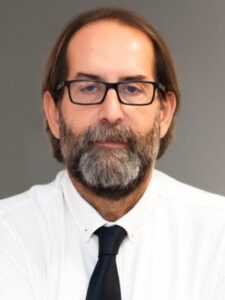
Alper Çabuk
Eskişehir Technical University, Türkiye, Professor
Presentation Title: Towards Sustainability and Resilience: The EPD-Net Paradigm for AI-Supported Ecological Planning and Designr
This keynote presentation introduces the Erasmus+ EPD-Net project, officially titled “Filling the Gap: Development of Ecological Planning and Design Learning Network and an Adaptive Smart Training Module for Disaster Resilient and Sustainable Cities.” The project brings together a broad international network of universities, professional bodies, NGOs, public-sector actors and private-sector organisations from 13 countries. Its central concern is the still underdeveloped role of ecological planning and design in disaster management, particularly in the mitigation, preparedness, response and recovery phases. The presentation will discuss how ecological planning, geospatial thinking, artificial intelligence and adaptive learning systems can be combined to strengthen the capacity of planners, designers, engineers, local authorities and other professionals working on disaster-resilient and sustainable cities. Particular attention will be given to the EPD-Net smart training module, the AI-supported EPD_Assist structure, scenario-based learning, green and digital skills, and the use of transnational learning networks for knowledge transfer.
Prof. Dr. Alper Çabuk is a landscape architect and academic at Eskişehir Technical University, Türkiye. He has more than three decades of experience in ecological planning, landscape planning, environmental design, geographic information systems, remote sensing, computer-aided design, disaster management and resilient city studies. He currently serves as Director of the Institute of Earth and Space Sciences at Eskişehir Technical University and coordinates the Erasmus+ EPD-Net project.
His academic and professional work focuses on the integration of ecological planning and design into spatial decision-making processes, with particular attention to sustainable land use, disaster risk reduction, climate adaptation, geospatial technologies and nature-based urban resilience. He has worked across higher education, research, professional accreditation and applied planning contexts, and has contributed to several national and international initiatives linking ecological design, spatial technologies and capacity-building.
Within EPD-Net, he leads the coordination of a transnational learning network that aims to strengthen the role of ecological planning and design in disaster management through AI-supported smart training, green and digital skills, and multidisciplinary cooperation among universities, NGOs, professional chambers, public institutions and technology-oriented enterprises.
- Artificial intelligence
- Climate adaptation
- Disaster risk reduction
- Disaster-resilient cities
- Geospatial technologies
- Green and digital skills
- Nature-based solutions
- Smart training module
- Sustainability
- Sustainable urban resilience
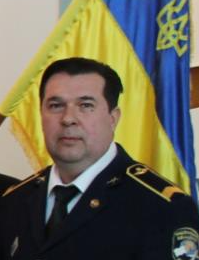
Dmytro Bugayko
National University “Kyiv Aviation Institute” (Ukraine). Doctor of Science (Economics)
Presentation Title: Sustainable Mobility Strategy and Decarbonisation of Aviation Supply Chains: Intelligent Transformation, Economic Levers and Safety Barriers
The report presents a strategy for decarbonizing aviation supply chains based on the concept of intelligent transformation and greening of logistics. The study is based on the author’s matrix model of human-artificial intelligence (AI) interaction, which allows optimizing “green” supply chains by moving from an auxiliary to an autonomous role of AI in resource management. It is substantiated that AI acts as the “brain” and the Internet of Things (IoT) as the “body” of an intelligent system, which together ensure the minimization of energy consumption and carbon emissions in real time. Special attention is paid to the reliability of monitoring environmental requirements. The author’s Graph RAG architecture is proposed, which combines knowledge graphs with language models for deterministic tracking of compliance with decarburization standards. This solution architecturally eliminates AI “hallucinations” and guarantees operational explainability (OpXAI): each report on emission reductions is accompanied by a direct link to verified regulatory acts. The risks of violating the independence of environmental barriers in the “Swiss Cheese” model are investigated, where an error in the common knowledge base can simultaneously compromise several levels of emission control. In the context of Ukraine’s post-war reconstruction, the proposed models become the foundation for developing cargo air hubs as intelligent ecosystems. The creation of such hubs is considered as a tool to overcome the shortage of qualified aviation personnel (CE 4, ICAO Safety Oversight System) and requires the implementation of innovative safety data management systems to neutralize new types of risks in a conflict environment. This will allow for the implementation of strategic scenarios for sustainable development and the ambitious state goal of Ukraine’s leadership in the field of AI, transforming linear supply chains into highly efficient logistics networks. The success of the research depends on achieving a high level of organizational maturity (Safety Maturity) and implementing the Human-AI Teaming model, which harmonizes environmental goals with operational reliability in conditions of international instability.
National University “Kyiv Aviation Institute”: 1997 -2001 assistant of professor, 2001-2022 associate professor, from 2022 – present professor (full) of Logistics dept., 2000 -2002 deputy dean of economics and management faculty, 2002 -2003 head of international research programmes department, 2002 -2003 deputy vice-rector on scientific research work, 2003 -2009 dean of economics and business faculty. 2009 – present leading researcher , 2017 – 2018 deputy head of international relations department, 2018 – present Vice director for international cooperation and education. 2007 – present instructor of ICAO institute. Air Ukraine Airline 1995-1996. Senior coordinator of transatlantic flights. 1995. Khors Airline. Manager of charter flights. Author and co-author: 286 scientific and methodological publications and patents in the logistics & aerospace field, including joint scientific publications with scientists from Azerbaijan, Bulgaria, Great Britain, Kyrgyzstan, China, Iraq, Poland, Slovakia, Uzbekistan, and the Czech Republic. Editor Board Member: International Journal of Transportation Research and Technology (Azerbaijan), Logistics and Transport (Poland), Intellectualization of Logistics and Supply Chain Management (Ukraine), Technology Audit and Production Reserves (Ukraine), Bulletin of Economic Science of Ukraine (Ukraine).
Sustainable Mobility, Strategy, Decarbonisation, Aviation Supply Chains, Intelligent Transformation, Economic Levers, Safety Barriers

Don Berchoff
TruWeather Solutions
Presentation Title: Is There a Benefit to Achieving Weather Superiority in Drone Warfare?
Can Gaining Weather Superiority produce an Asymmetric Advantage in Drone Warfare and Counter-Drone Operations? Is there truth to the notion that the side that best understands and exploits the low-altitude atmosphere gains the initiative in battle? This presentation explores this topic. The military and homeland security systems have made progress toward integrating weather into the kill and/or interdiction chain. The problem is the weather data feeding these systems has flaws that no amount of AI or ML modeling can solve without better, high density weather data. TruWeather is addressing these flaws by introducing capabilities for greater weather data collection in the battlespace through novel data collection techniques, fusion and intelligent delivery approaches.
Berchoff spent 24 years in the Air Force, retired as a Colonel, ran an expeditionary Air Force base, built regional weather centers and later served as Science and Technology Director at the National Weather Service. He is a 2003 graduate of National War College with deep insight into military doctrine and capabilities. He founded TruWeather in 2015 to close what he calls the “low-altitude data desert,” the band of atmosphere below 5,000 feet where satellites lose resolution and militaries and homeland defenders have an incomplete view of the weather at the precision and certainty that matters a great deal to successful drone warfare and counterdrone operations.
Weather, Drones, Weather Superiority, low altitude weather, counterdrone, Weather in warfare, D-Day
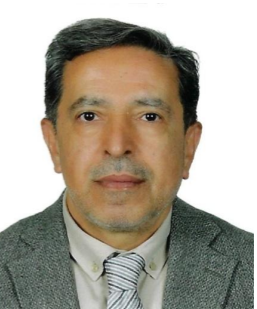
Dursun Çiçek
Pepper Motion Alagöz Electric Vehicles and Energy Storage Systems Inc. – Chief Executive Officer (CEO)
Presentation Title: 100% Electric Conversion of Fossil-Fuel Commercial Vehicles: A Case Study on Economic, Environmental, and Operational Benefits
The transition to sustainable transportation requires practical solutions for reducing
the environmental impact of existing commercial vehicle fleets. This presentation provides
an overview of 100% electric conversion, or repowering, as an alternative approach to the
electrification of fossil-fuel commercial vehicles.
The presentation introduces the concept of vehicle conversion and explains how
existing buses and trucks can be transformed into fully electric vehicles while extending their
useful life. It discusses the environmental, economic, and operational perspectives of this
approach, with a particular focus on sustainability, circular economy principles, energy
efficiency, and the decarbonization of commercial transportation.
Drawing on practical experience and an implemented conversion project in Türkiye,
the presentation will highlight the potential of repowering to complement new electric
vehicle production and support the transition toward cleaner and more resource-efficient
mobility. It will also address the key challenges and requirements for the wider adoption of
electric vehicle conversion, including regulatory, financial, technological, and infrastructure
considerations.
Overall, the presentation aims to demonstrate how vehicle conversion can contribute
to the transformation of existing commercial fleets and support Türkiye’s transition toward
sustainable and low-carbon transportation.
Dursun Çiçek is a Mechanical Engineer who graduated from Middle East Technical
University (METU) and has more than 40 years of professional experience in engineering,
technology, management, and industrial projects. His career includes extensive experience in
both the private and public sectors, with 13 years in the defense industry at leading
organizations including TAI Aerospace Industries and FNSS Defense Systems.
Throughout his career, he has taken active roles in technology-intensive projects, serving as a
project manager, technical team leader, and senior executive in tram, metro, and electric bus
projects. He also served in managerial positions at TÜBİTAK, where he was involved in the
implementation of industrial R&D and technology support programs across multiple
technology disciplines.
His recent work has focused on sustainable transportation and vehicle electrification. He has
played a leading role in the development and implementation of a 100% electric bus
conversion project, including the successful completion of the regulatory testing required for
passenger operation.
Currently, Dursun Çiçek is the founding partner and CEO of Pepper Motion Alagöz Electric
Vehicles and Energy Storage Systems Inc., where he leads the development of 100% electric
conversion solutions for fossil-fuel commercial vehicles, including buses, trucks, and
minibuses, as well as new electric commercial vehicle projects in Türkiye.
100% Electric Conversion; Carbon Emission; Circular Economy; Commercial
Vehicles; Life Cycle Emissions; Repowering; Sustainability; Total Cost of Ownership
(TCO)

Kateryna Synylo
Associate Professor Kyiv Aviation Institute
Presentation Title: Fuel burn and emission model for EFACA Aircraft
The EU concept of environmentally friendly aviation by 2050 (compared to 2000) provides for the use of new technologies: to reduce the perceived aircraft noise by 65%, nitrogen oxide emissions – by 90%, carbon dioxide by – 75%. Achieving these goals requires changes in aircraft design, improved aerodynamic configurations and the use of innovative engines. Sustainable aviation fuels (SAF) should account for at least 5% of aviation fuels by 2030 and 63% by 2050. EFACA (Environmentally Friendly Aviation for all Classes of Aircraft) project is focused on the development of new technologies by using electric and hybrid thermoelectric propulsions, hydrogen and new sustainable aviation fuel to replace fossil fuel. A performance comparison across the mission flight profile of the conventional ATR72-600 and the hybrid-electric An300 aircraft indicates that the integration of electric motors reduces fuel burn by 18.75%. Correspondingly, emissions of CO2, NOx, and H2O are reduced by 18.75%, 50%, and 18.75%. Modeling results by PolEmiCa software for the reference aircraft (including the 3% engine efficiency improvement proposed for the ATR-72EVO) shows a 5–8% reduction in CO2 emissions when utilizing SAF. The fuel consumption and emissions of an aircraft operating on liquid hydrogen fuel (An200) were investigated and compared with those of a kerosene-fueled reference aircraft (A320N/LEAP1A). Emission inventory calculations for individual stages of the mission flight profile show a significant reduction in fuel consumption (by 56%) for the An200 compared to the A320neo. However, there is a substantial increase in H2O emissions (+175%) and a minor difference in NO𝑥 emissions (0.5%).
Kateryna Synylo is an Associate Professor at the Department of Civil and Industrial Safety of National University “Kyiv Aviation Institute” (KAI). In 2013 defended PhD thesis on the theme of “Monitoring of aircraft engine emissions and air pollution inside the airports”. Her research focuses on the modeling of global/local aviation emissions, dilution of air contaminants by exhaust gasses from aircraft engines and assessment of airport air quality. Since 2020 she has participated at Local Air Quality Task Group (LAQ-TG) of the work group “Models and Databases” of the ICAO/CAEP. This group is focused on the technical and economic development of a new metric for estimating local pollution of the atmospheric air at the airport. Since 2021 she is also a researcher of LLC “Center of Environmental Projects for Airports” (CEPA).
Emission index, emission inventory, fuel consumption, fuel efficiency, hybrid electric propulsion, hydrogen aircraft
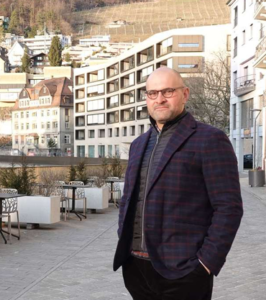
Ludwig Sadredin Sahesch-Pur
Director PUR Consulting & Advisory International
Presentation Title: Why only soft skills counts in mobility and social innovational technologies worldwide
Artificial intelligence and autonomous systems are rapidly transforming global mobility across land, air, maritime, sub-surface, and emerging space infrastructures. While these advancements enhance efficiency and connectivity, they also intensify the need for a strong human-centered approach grounded in ethical responsibility and societal alignment. This paper emphasizes the critical role of the human factor as a guiding element in AIdriven mobility ecosystems. It argues for the development of globally competent human advisors who combine technological expertise with moral judgment and a continuous learning mindset rooted in the historical evolution of technology. The integration of diverse mobility domains requires unified ethical governance involving regulators, policymakers, and industry stakeholders. In the context of current political, economic, and geostrategic uncertainties, moral resilience and responsible oversight are essential. Embedding human values into AI systems ensures that mobility innovation supports sustainable development, international cooperation, and long-term societal well-being.
Mr. Sahesch-Pur is an international senior executive advisor, speaker, and founder based in Switzerland and Germany. He specializes in global power plant safety architectures, mobility and drones for digital governance, risk management, and cross-cultural market development spanning Europe and Asia. Bio: Sadredin (Ludwig) Sahesch-Pur is an entrepreneur and has been selfemployed and active in digital business model development since 2019 the agency for digital business analysis and online critical communication, after working for several companies in Germany and Switzerland in various specialist and management functions. Born and raised in Germany and Switzerland studied civil and mechanical engineering in 2001 at the OTH Regensburg. Started my PhD career in 2007 in UK Cranfield and got an offer from the industry at the same time. Collecting practical international experience worldwide in commissioning and inspection services around the world. Went through diverse trainee programs from engineering teams to safety trainings and management positions inside of the corporation. Added in 2012 my expertise in welding and quality management certification [IIW] in Germany and international law at the UZH in 2015. After my corporate-experience as riskmanager the previous years, I finished the Swiss-Asian MBA in 2022 in international management businesses, after collecting entrepreneurial experience. I joined an international lectureship program in 2022 in Shenzhen at the SZTU Shenzhen Business School. 2026 he was receiving credentials for his social academical and international contribution with an PhD from Orange County University in LA (US).
Soft Factors, Human Advisors, Sociality and Technological Interaction in all fields of autonomous vehicles and sustainable leadership
Lifelong Learning
Innovation in the Age of AI
How Are AI Intelligence and Human Intelligence Different?
How AI Skills Are Shifting from Knowledge to Judgment
The Human Side of Human–AI Collaboration
The Future Still Needs Humans More Than Ever Before
Humans with Strong Voices Are Needed Everywhere
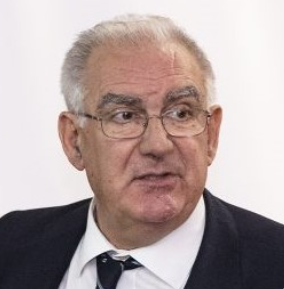
Luiz Manuel Braga da Costa Campos
Emeritus Professor
Presentation Title: Challenges of electrification of aircraft over the full power range
The challenges of electrification of aircraft are considered over the full range of powers, in four cases: (case I) very low (less than 0.2 MW) for solar powered aircraft which is sometimes claimed ‘unlimited endurance’ at altitude; (case II) low (0.2-1 MW) for e-VTOLs and urban air mobility for up to 6 passengers with ranges up to 200 km; (case III) high (2-10 MW) for regional propellers with up to 80 passengers and 1000 km range, with hydrogen fuel cells combined with gas turbines in hybrid turborelectric propulsion; (case IV) very high (10-100 MW) for jetliners, in which case decarbonization is currently considered by: (case IVa) hydrogen fuelled gas turbines up to 200 passengers and 3000 km; (case IVb) synthetic aviation fuels for more than 200 passengers or range over 3000 km. The issues related to potential electrification (case IVc) for the largest long range airliners are also addressed. The conclusion indicates the main challenges in each of the 6 cases.
Luiz Manuel Braga da Costa Campos was born in 1950, joined the staff of Lisbon University in 1970, became chair professor in 1986, was coordinator of aerospace engineering degrees since their creation in 1991 until retirement in 2020, as emeritus professor. Obtained the Ph.D. from the Engineering Department of Cambridge University, was Senior Rouse Ball Scholar from Trinity College at the Department of Applied Mathematics and Theoretical Physics, and Alexander von Humboldt Scholar at the Max-Planck Institut for Aeronomie. Is author of 18 books, 181 papers in 89 journals, 286 communications to symposia, participated in 40 research projects with international funding, refereed for 45 journals and member of editorial board of 6. Received the von Karman Medal from the RTO and Lifetime Achievement Award from SARES.
Aerospace Engineering
Flight Mechanics
Air Traffic Management
Aeroacoustics
Aerodynamics
Structural Mechanics
Space Science
Rockets
Magnetohydrodynamics
Solar-Terrestrial Physics
Mathematical and Physical Models
Special Functions
Differential Equations
Relativity and Gravitation
Quantum Mechanics

Nguyen Dinh Dung
Faculty of Aerospace Engineering, Le Quy Don Technical University, Hanoi, Vietnam
Presentation Title: Analysis and comparative evaluation of formation control methods for quadrotor UAV
Formation control of quadrotor UAVs has attracted significant attention due to its scalability, flexibility, and reliability in cooperative missions such as surveillance and search-and-rescue. However, the design of control strategies remains challenging due to the nonlinear and underactuated dynamics of quadrotors, as well as communication constraints and strict safety requirements. This paper presents a systematic survey of formation control methods for quadrotor UAVs, including leader–follower, consensus-based control, virtual structure, artificial potential field, and behavior-based approaches. In addition, modern techniques such as distributed robust–adaptive control, particle swarm optimization (PSO), and deep reinforcement learning (DRL) are also reviewed. A comparative evaluation is conducted based on criteria such as scalability, formation accuracy, robustness, and stability. Finally, key challenges and future research directions are discussed.
Dinh-Dung Nguyen is a professor at the Faculty of Aerospace Engineering, Le Quy Don Technical University, Hanoi, Vietnam. He received his Ph.D. in Transportation Engineering and Vehicle Engineering at the Budapest University of Technology and Economics, Hungary, in 2021. He has been involved in several national and international studies and projects related to sustainable aviation, aviation engineering, aerial vehicles, system design, and control device integration of aircraft, concentrating on assessing security vulnerabilities and countermeasures. He also served on an organizing committee of international conferences. He is a reviewer for international scientific journals. His research interests are drone management, unmanned aerial vehicles, system design, control device integration of aircraft, transportation system in smart city, urban planning and forecasting.
Quadrotor UAVs; Formation control; Leader–follower; Consensus control; Behavior-based control; Artificial potential field.
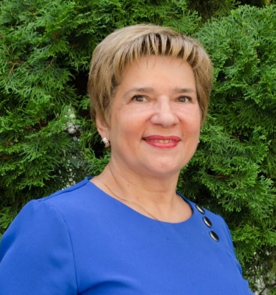
Mariia Hryhora
National Technical
University of Ukraine “Igor Sikorsky Kyiv Polytechnic Institute”, Kyiv, Ukraine
Presentation Title: National Technical University of Ukraine “Igor Sikorsky Kyiv Polytechnic Institute”, Kyiv, Ukraine
The report presents a strategy for decarbonizing aviation supply chains based on the concept of intelligent transformation and greening of logistics. The study is based on the author’s matrix model of human-artificial intelligence (AI) interaction, which allows optimizing “green” supply chains by moving from an auxiliary to an autonomous role of AI in resource management. It is substantiated that AI acts as the “brain” and the Internet of Things (IoT) as the “body” of an intelligent system, which together ensure the minimization of energy consumption and carbon emissions in real time. Special attention is paid to the reliability of monitoring environmental requirements. The author’s Graph RAG architecture is proposed, which combines knowledge graphs with language models for deterministic tracking of compliance with decarburization standards. This solution architecturally eliminates AI “hallucinations” and guarantees operational explainability (OpXAI): each report on emission reductions is accompanied by a direct link to verified regulatory acts. The risks of violating the independence of environmental barriers in the “Swiss Cheese” model are investigated, where an error in the common knowledge base can simultaneously compromise several levels of emission control. In the context of Ukraine’s post-war reconstruction, the proposed models become the foundation for developing cargo air hubs as intelligent ecosystems. The creation of such hubs is considered as a tool to overcome the shortage of qualified aviation personnel (CE 4, ICAO Safety Oversight System) and requires the implementation of innovative safety data management systems to neutralize new types of risks in a conflict environment. This will allow for the implementation of strategic scenarios for sustainable development and the ambitious state goal of Ukraine’s leadership in the field of AI, transforming linear supply chains into highly efficient logistics networks. The success of the research depends on achieving a high level of organizational maturity (Safety Maturity) and implementing the Human-AI Teaming model, which harmonizes environmental goals with operational reliability in conditions of international instability.
Dr. Mariia Hryhorak is a Doctor of Economic Sciences, Honorary President of the Ukrainian Logistics Alliance, and a CSCMP member. She pioneered logistics as a higher education field in Ukraine and chaired the Department of Logistics at the National Aviation University for 18 years. Her research focuses on general logistics theory, sustainable supply chain management, logistics market and the national logistics system. A prolific scholar, Dr. Hryhorak has authored over 300 works, including 6 monographs, 14 textbooks, and 16 articles indexed in Scopus and Web of Science. She has also supervised 12 PhD candidates in air transport economics and logistics. |
Reflecting her industry expertise, she served as a Senior National Key Expert (NKE) in Multimodal Transport for the EU project supporting the EU-Ukraine Association Agreement. Currently, she is Editor-in-Chief of “Intellectualization of Logistics and Supply Chain Management” and leads the EU-funded Erasmus+ Jean Monnet project “Sustainable Supply Chains in EU.”
Sustainable Supply Chain Management
Sustainable Business Ecosystems
Capillary Logistics
Swarm Coordination
Hyper-Resilience
Wartime Logistics Transformation
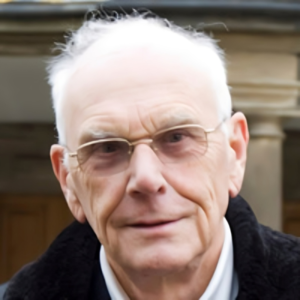
Max. F. Platzer
Distinguished Professor Emeritus, Naval Postgraduate School, USA
Presentation Title: Do the Technology Choices Determine the Outcomes of Conflicts Between Nation States?

Oleksandr Zaporzhets
Institute of Aviation (Łukasiewicz Research Network – Institute of Aviation), Warsaw, Poland
Presentation Title: Modelling the Effects of Disruptive Technologies on Environmental Impact of the New Aircraft Designs by Calculation Platform VALDES
EU EFACA (Environmentally Friendly Aviation for all Classes of Aircraft) project considers conceptual designing of two new types of aircraft – 80-seat regional jet with hydrogen-powered hybrid electric propulsion system (HEP) and 150-seat short-medium range jet with liquid hydrogen (LH2) fueling of the engines. For both types the Top-Level Aircraft Requirements (TLAR) are defined so as their conceptual aircraft layout, main dimensions and flight masses, schemes of power supply during the flight. Analysis of these baseline aircraft proved the reference aircraft for both of them: ATR72-600 for the HEP aircraft and Airbus-320neo for the LH2-fueled aircraft. The principles of aircraft fuel burn, emission, noise (with further impact assessment on environment) analysis and assessment of the baseline aircraft in comparison with reference aircraft in the EFACA project are formulated for three levels of their evaluation – aircraft, airport and fleet scenarios of current and future air traffic in the European perspective. For these purposes the VALDES Space was designed and developed further with detailed analysis of the aircraft design and flight performances influence on environmental impact assessment.
Between the 1978-2022 was employed in National Aviation University, Kyiv, Ukraine on the positions of Researcher, Leading Researcher, Professor, Head of the Chair, Director of the Institute, Vice Rector. From the April 2022 is employed in the Łukasiewicz Research Network – Institute of Aviation in Warsaw, Poland, on a position of the Area Research Leader – Professor. Degree of the Dr.Sc. was obtained in 1998 by the defending the thesis “Development of Models and Methods of Information Provision for Environment Protection from Civil Aviation Impact”. The title of Professor was obtained in 2004 by decision of the Academic Council of the National Aviation University. ICAO CAEP (Committee on Aviation Environmental Protection) member between 2010-2020 by nomination from Ukrainian CAA, currently a member of the MDG, WG2 and ISG groups of the CAEP. ECAC AIRMOD (Aircraft Noise Modelling Task Group) and EAEG (European Aviation and Environment Group) member from 2010. SARES member from 2015 and a member of the management board from 2023.
1- Aircraft
2- HEP hybrid electric propulsion system
3- LH2liquid hydrogen fueling of the engines
4- Fuel burn
5- Emission
6- Noise
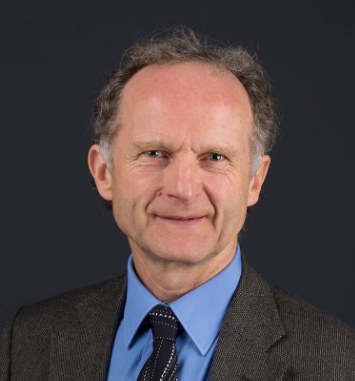
Paul Parker
University of Waterloo, Emeritus Professor
Presentation Title: Baseline Electric Plane Performance: Achievements Today, Expectations for Tomorrow
The 21st century is seeing a revolution in transportation technology as electric motors replace internal combustion engines. This revolution is led by the automotive industry with cars followed by trucks, bicycles and other micro-mobility devices. The template for electrification of land-based transportation is being tested next by ships and planes. This paper examines the baseline performance of current electric aviation technology and then looks ahead with the trends created from recent research and investment in new battery technologies. Over 30 countries have approved and certified their first piloted electric plane as well as numerous remotely piloted aircraft systems, RPAS, or drones. In the conventional aviation industry, pilot training is one of the first markets targeted by electric plane manufacturers. This study examines the first e-plane approved in Europe and Canada, the Pipistrel Velis Electro, and answers a common question from flight schools: how many hours can it fly per day? The time required for charging is perceived as major constraint on the e-plane’s availability. Daily flight hours varied with weather and operational constraints. On average, four hours were logged per flying day (under visual flight rules) over the study period. Investments in battery technology are improving energy density, charging rates and duration. That will increase the range of viable electric flight applications. The August 2026 flight of a 30-seat e-plane prototype in illustrates the expected increase in e-plane capability over the next few years.
Paul Parker is a Professor Emeritus in the Faculty of Environment, University of Waterloo, Canada. Previous positions include founding Associate Director – Waterloo Institute for Sustainable Aeronautics, Associate Dean – Strategic Initiatives, Director – Economic Development Program, Chair – Geography and Associate Director – Waterloo Institute for Sustainable Energy. He has degrees from Mount Allison University (B.A., B.Sc.), Australian National University (M.A.) and London School of Economics (Ph.D.) He taught core courses in the Economic Development and Innovation, and Climate Change masters programs for over three decades. His research focuses on building sustainable communities by creating win-win opportunities for the environment and economy. He led the team that brought the first internationally certified electric plane to Canada to test its operational capabilities. The e-plane is part of a solar powered micro grid to demonstrate low carbon flying. Another project examines the use of simulators for glider pilot training
Electric planes, 2. operational research
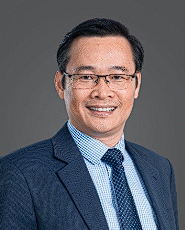
Pham Van Hong
Rector of Phenikaa School of Economics and Business, Phenikaa University, Vietnam
Presentation Title: LAE: Reality, Opportunities and Challenges: Case of Vietnam
The Low-Altitude Economy (LAE) is emerging as a new growth domain driven by unmanned aerial vehicles, advanced air mobility, digital infrastructure, and technology-enabled services operating in low-altitude airspace. This study examines the current development, opportunities, and challenges of the LAE in Vietnam. Using a qualitative approach combining desk research, policy analysis, and evidence from relevant industries, the study evaluates Vietnam’s readiness to develop a safe, innovative, and sustainable LAE ecosystem. The findings indicate considerable potential for LAE applications in logistics, agriculture, emergency response, environmental monitoring, tourism, infrastructure inspection, and urban mobility. Vietnam’s expanding digital economy, growing technology sector, geographical characteristics, and increasing demand for efficient transportation services provide favourable conditions for future development. However, several barriers remain, including fragmented regulations, limited airspace management mechanisms, insufficient supporting infrastructure, technology dependence, cybersecurity and safety risks, public acceptance, and shortages of specialised human resources. The study argues that Vietnam requires an integrated national LAE strategy supported by regulatory sandboxes, coordinated airspace governance, investment in digital and physical infrastructure, and stronger university–industry–government collaboration. The research contributes a contextualised assessment of Vietnam’s LAE landscape and provides policy and strategic recommendations for building an innovation-driven ecosystem that supports national competitiveness and sustainable economic transformation.
Assoc. Prof. Dr. Pham Van Hong is Rector of the School of Economics and Business at Phenikaa University, Vietnam. He is an academic leader, entrepreneur, and higher education expert with over 25 years of experience in entrepreneurship, SME development, innovation, and university governance. He holds a Ph.D. from the National Economics University and completed an Executive MBA under the NTU–MIT Alliance Program at Nanyang Technological University through a Singapore Government fellowship. He also pursued executive studies at the MIT Sloan School of Management.
His teaching and research interests include Entrepreneurship, SMEs, Innovation, Value Chains, Marketing Management, Aviation Economics, and the Low Altitude Economy. His recent work focuses on emerging aviation ecosystems, drone-enabled services, advanced air mobility, and innovation-driven economic models. He has played a pioneering role in introducing Aviation Economics education at Phenikaa University and advancing research collaboration in the Low Altitude Economy.
Assoc. Prof. Dr. Hong has authored or co-authored over 40 publications and held senior positions at Dai Nam University, NISTPASS, Vietnam National University, and Viettronics Technological College. Through his leadership, he promotes university–industry collaboration, international partnerships, innovation-driven education, and sustainable economic development in Vietnam and the wider region.
- Entrepreneurship
- SMEs
- Innovation
- Value Chains
- Marketing Management
- Aviation Economics
- Low Altitude Economy
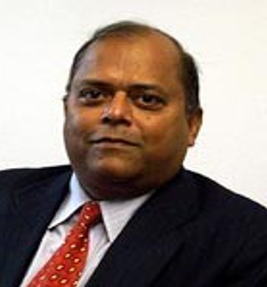
Ramesh K. Agarwal
Ramesh K. Agarwal
Presentation Title: Design and Analysis of Hydrogen Engine Powered Long-Range and Fuel-Cell Powered Short-to Medium-Range Aircraft
This paper presents the extension and validation of hydrogen-propulsion modelling capabilities of the Washington University Aircraft Design Software (WUADS) for conceptual design of both hydrogen fuel-cell (HFC) and hydrogen combustion powered aircraft. The first effort focuses on the development of a comprehensive hydrogen fuel-cell propulsion module for WUADS, intended to model short- to medium-range aircraft where the fuel-cell systems provide the highest efficiency due to moderate cruise power and thermal-management demands. This extension introduces detailed subsystem models for the fuel-cell stack, air-management system, inverter, and electric motor to simulate energy conversion and power distribution within a fully electric hydrogen powered architecture. The results indicate that the code performs well and reproduces correct subsystem behaviour relative to published data, although some quantitative differences remain due to scaling and correlation limitations. HFC aircraft validation cases have been conducted on Cessna 208, CRJ 600 and Boeing 717-200 to assess performance, efficiency, and feasibility for future regional hydrogen-electric aircraft. The second validation focuses on a long-range hydrogen combustion configuration using the Boeing 747-400 as a representative case study to verify that WUADS – previously applied only to smaller, short- and medium-range aircraft – can accurately scale to large, high-capacity intercontinental transports. Validation reproduced the payload – range behaviour of the 747-400 within 0.5 % of published Boeing data, and Bayesian optimization recovered key geometric and performance parameters – including range, span, and wing area – with less than 2% deviation. The optimized hydrogen-powered configuration maintained identical passenger and cargo capacity while achieving a 38 % increase in maximum range compared to the baseline kerosene-fuelled model, reaching 10,054 nmi. These findings confirm that WUADS can accurately capture aerodynamic performance, mission range, and energy requirements for large transport aircraft, demonstrating its scalability and reliability for hydrogen combustion applications.
Professor Ramesh K. Agarwal is the William Palm Professor of Engineering in the department of Mechanical Engineering and Materials Science at Washington University in St. Louis. From 1994 to 2001, he was the Sam Bloomfield Distinguished Professor and Executive Director of the National Institute for Aviation Research at Wichita State University in Kansas. From 1978 to 1994, he was the Program Director and McDonnell Douglas Fellow at McDonnell Douglas Research Laboratories in St. Louis. Dr. Agarwal received PhD in Aeronautical Sciences from Stanford University in 1975, M.S. in Aeronautical Engineering from the University of Minnesota in 1969 and B.S. in Mechanical Engineering from Indian Institute of Technology, Kharagpur, India in 1968. Over a period of forty-five years, Professor Agarwal has worked in various areas of Computational Science and Engineering – Computational Fluid Dynamics, Computational Acoustics and Electromagnetics, Control and Systems Theory, and Multidisciplinary Design and Optimization. He is the author and coauthor of over 600 journal and refereed conference publications. He has given many plenary, keynote, and invited lectures at various national and international conferences worldwide in over sixty countries. Professor Agarwal continues to serve on many academic, government, and industrial advisory committees. Dr. Agarwal is a Fellow thirty professional societies including the Institute of Electrical and Electronics Engineers (IEEE), American Association for Advancement of Science (AAAS), American Institute of Aeronautics and Astronautics (AIAA), American Physical Society (APS), American Society of Mechanical Engineers (ASME), and American Society for Engineering Education (ASEE). He has received many prestigious honors and national/international awards for his research contributions including the AIAA Reeds Aeronautics Award, SAE Medal of Honor, ASME Honorary Membership and Honorary Fellowship from Royal Aeronautical Society.
Hydrogen Fuel Cell Powered Regional Aircraft; Hydrogen Engine Powered Long-Range Aircraft; WUADS Design Software; Cessna 208; Boeing 747

Sergii Boichenko
National Technical University of Ukraine “Igor Sikorsky Kyiv Polytechnic Institute
Presentation Title: Hydrogen architecture in aviation: strategic guidelines and development challenges
Hydrogen architecture in aviation encompasses a set of ground systems for the production, storage, transportation and refueling of liquid or gaseous hydrogen at airports. Its development is a major obstacle to the emergence of commercial hydrogen aircraft due to the complexity of logistics and ultra-low storage temperatures. Part of the global architecture is the design of an aircraft using hydrogen and fuel cells. Hydrogen fuel cells in drones provide 3–5 times longer flight time (over 3 hours versus 40 minutes) compared to conventional lithium batteries, quick fuel changes in a minute instead of lengthy charging, and low noise and heat emissions.
05.2018–02.2019 – Director of the Education-Research Institute of Environmental Safety (National Aviation University). 02.2019–11.2020 – Dean of the Faculty of Environmental Safety, Engineering and Technology (National Aviation University). 11.2020–30.06.2021 – Supervisor of the Ukrainian Research and Educational Center of Chemmotology and Certification of Fuels, Lubricants and Technical liquids. 01.09.2021–till now – National Technical University of Ukraine “Igor Sikorsky Kyiv Polytechnic Institute”, Supervisor of the Supervisor of the EDUCATIONAL AND SCIENTIFIC LABORATORY OF THERMOMOLECULAR ENERGY, BIOFUEL AND HYDROGEN TECHNOLOGIES, Head of the Department of Automation of Electrical and Mechatronic Complexes .
1 – Sustainable Aviation Fuels 2 – Chemmotology 3 – Aviation fuel supply 4 – Chemmotological reliability 5 – BioJet 6 – Gasoline (reformulative) 7 – Hydrogen-Powered Unmanned Aerial Vehicles 8 – Fuel Cell 9 – Unmanned Aerial Vehicles
Serhii Fil
ANTONOV Company; Chief Designer of R&D Department, PhD in aircraft design
Presentation Title: From Concept to Aircraft: The Role of International Research and Innovation Programmes in Advancing Sustainable Aviation
Developing future aviation requires new technologies and effective cooperation between industry, research organizations and universities. The introduction of hydrogen and hybrid-electric propulsion systems, fuel cells and other low-emission technologies presents new challenges for aircraft design, requiring knowledge and experience from a variety of technical disciplines. International collaborative R&D programmes provide an important platform for this kind of cooperation. They allow partners to combine their expertise, share experience and work together on new technical solutions. These programmes also help to mitigate the risks associated with the development of new technologies and support their further integration into future aircraft. This keynote will discuss the importance of international R&D cooperation in developing low- and zero-emission aviation technologies. Experience gained within the EFACA project will demonstrate how collaborative research can inform aircraft conceptual design and facilitate the integration of new propulsion and technologies.
Currently works as Chief Designer of the R&D Department. Works for Antonov since 1978. More than 40 years of scientific experience in leading positions. Research experience in advanced aircraft design, aircraft requirements and standards development. Has participated in the development of the following aircraft An-71, An-225, An-70. Leader of the An-74 modification project, interior design of aircraft An-26-100, An-74, An-148, An-158. Over 10 years of teaching experience at universities and colleges. Experience in developing and teaching courses on “Integral Aircraft Design”, including aircraft architecture and applicable development process. Author of over 10 scientific articles.
Sustainable aviation, Collaborative R&D, Hydrogen-Powered aircraft, Hybrid-Electric Propulsion, Aircraft Concept Development

Suzanne Kearns
University of Waterloo, Canada | Associate Professor, Aviation; Founding Director, Waterloo Institute for Sustainable Aeronautics (WISA)
Presentation Title: Talent as a Sustainability Strategy: Preparing the Next Generation of the Aviation Workforce
Aviation’s transition toward a more sustainable future is often discussed in terms of new aircraft, fuels, digital systems, automation and infrastructure. Yet none of these transformations can succeed without people who understand the system they are changing. This keynote positions talent development as a core sustainability strategy for aviation. It explores the dual challenge of attracting and preparing the next generation of the workforce while ensuring that sustainability is not treated as the responsibility of a small group of specialists. Instead, foundational sustainability literacy must become part of professional competence across the aviation system – from engineering, operations and maintenance to air traffic management, airports, policy, business and emerging fields such as drones, artificial intelligence and autonomous systems. The address will consider what this shared literacy should include: systems thinking, climate and environmental impacts, social and economic dimensions of sustainability, emerging technologies, operational trade-offs, and the ability to make informed decisions in a rapidly changing sector. It will also highlight the importance of accessible, scalable and interdisciplinary education pathways that allow learners and current professionals to continually build new competencies. Preparing people to understand, lead and adapt to change is not simply a workforce issue; it is essential infrastructure for aviation’s sustainable future
Dr. Suzanne Kearns is an Associate Professor and Founding Director of the Waterloo Institute for Sustainable Aeronautics at the University of Waterloo, Canada. An aviation academic, educator and commercial fixed-wing and helicopter pilot, her work focuses on aviation sustainability, education, competency development, and the future aviation workforce. She is the author of Fundamentals of International Aviation, E-Learning in Aviation, and Competency-Based Education in Aviation, and has led international education initiatives designed to make high-quality aviation learning accessible at scale. Through a long-standing partnership with the International Civil Aviation Organization (ICAO), Dr. Kearns has helped develop online aviation education that has reached more than 7,000 learners across 141 countries, including new sustainability micro-credentials intended to build foundational knowledge across the sector. Her teaching and leadership have been recognized nationally and internationally, including the University of Waterloo Distinguished Teacher Award, recognition among Canada’s Top 100 Most Powerful Women, and election as a Fellow of the Royal Aeronautical Society. Her current work brings together universities, industry, government and international organizations to accelerate sustainable aviation through research, education and talent development.
Sustainable aviation; aviation workforce; talent development; sustainability literacy; aviation education; competency-based education; future skills; interdisciplinary learning; emerging technologies

Tahir Hikmet Karakoç
President of SARES
Presentation Title: Future Mobility and Autonomous Systems: Electric Vehicles, Drones, Artificial Intellegence and the SARES Vision

Tran Thi Thai Binh
Aviation Economics Program Director
Presentation Title: Assessing Low Altitude Economy Readiness Across ASEAN Member States
The emergence of the Low-Altitude Economy (LAE) presents ASEAN with a new opportunity to strengthen regional connectivity, accelerate digital transformation, and address development challenges arising from its diverse geographical conditions. This study develops a comparative framework to evaluate the readiness of ASEAN Member States for integrating low-altitude activities into their national economies. The assessment covers six dimensions: airspace governance, regulatory maturity, technological capability, supporting infrastructure, commercial ecosystem, and workforce preparedness. Drawing on publicly available policy documents, aviation statistics, digital-development indicators, and industry reports, the study applies a multi-criteria readiness assessment to identify different national development patterns. ASEAN Member States are subsequently grouped into emerging, developing, and advancing LAE ecosystems based on their institutional and operational capabilities. Particular attention is given to regional disparities, archipelagic and remote-area needs, cross-border drone operations, and the potential for interoperability among national unmanned traffic management systems. The study argues that ASEAN should not adopt a uniform development model but pursue differentiated national pathways within a coordinated regional framework. It recommends establishing common technical standards, regulatory sandboxes, shared testing corridors, regional training networks, and mechanisms for cross-border data governance. The findings provide a foundation for an ASEAN LAE Readiness Index and future regional policy cooperation.
Dr. Tran Thi Thai Binh is an aviation strategist, educator, researcher, international author, and business consultant with extensive experience in aviation, higher education, and industry leadership. She currently serves as Aviation Economics Program Director at the School of Economics and Business, Phenikaa University, Vietnam. She earned her Ph.D. in Management Sciences from the University of Poitiers, France, focusing on strategic fit and transformation in the airline industry.
Her academic and professional interests encompass airline strategy, aviation economics, airline and airport management, sustainability, digital transformation, and transportation systems. She is the author of the Routledge book Navigating Change: Strategic Fit and Transformation in ASEAN Aviation, published in the prestigious Managing Aviation Operations Series. Her work explores how airlines in emerging markets respond to environmental turbulence, market disruption, and strategic transformation. Dr. Thai Binh previously held leadership and consulting positions at Cambodia Angkor Air, the Vietnam Aviation Academy, and PwC Vietnam. She actively contributes to research, executive education, industry engagement, and international academic collaboration across Southeast Asia. As Series Editor of the Sustainable Aviation and Sustainable Transportation Book Series published by Springer, she works with global scholars and industry experts to advance interdisciplinary research on the future of aviation and transportation systems.
– Aviation Economics and Management – Logistics and Supply Chains – Low Altitude Economy – Digital Transformation – Transportation Systems
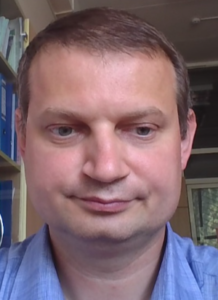
Vitalii Makarenko
Kyiv Aviation Institute, associate professor
Presentation Title: Modelling of Earth's climate response to emissions of the conceptual EFACA jet airliner
Decarbonizing aviation requires disruptive architectures. This study models the Earth's
climate response to the simulated fleet-wide phase-in of the conceptual EFACA liquid
hydrogen (LH₂)-powered airliner. Conventional and hydrogen-burning airplane emissions
are based on vertical-plane trajectory obtained by solving flight-dynamic differential
equations. Furthermore, the exact proportion of these emissions deposited into the lower
stratosphere is quantified by accounting for the seasonal altitude fluctuations of the
extratropical tropopause. Utilizing the IPCC-calibrated FaIR model under an SSP2-4.5
scenario, we employ a comprehensive Well-to-Wake (WtW) method to evaluate net climate
forcers. Eliminating direct CO₂ and soot from the atmosphere has a significant impact on
ice-crystal microphysics and reduces persistent contrail radiative forcing. The cooling
benefits are balanced against the warming penalties, including higher exhaust of water vapor,
influence of changes in nitrogen and sulfur oxide emissions of methane and ozone, and
energy-intensive LH₂ generation. Simulations predict a significant long-term decline in
Global Mean Surface Temperature (GMST). However, WtW analysis shows that these
advantages are dependent on the energy supply chain's decarbonization trajectory.
Combining zero-soot LH₂ propulsion with active contrail avoidance results in synergistic
cooling. However, intensive grid decarbonization is necessary to prevent well-to-tank
Vitalii was born on 28 July 1984. Since 2010, he has been employed at the National University “Kyiv Aviation Institute,” Ukraine, where he has held positions as a junior and senior researcher in the Scientific Research Vibroacoustic Laboratory and as an associate professor in the Department of Aviation Engineering at the Aerospace Faculty.
In 2014, he obtained the degree of Candidate of Sciences (Cand. Sc.) after successfully defending his dissertation entitled “Methods of Vibration and Sound Radiation Reduction Control of Elastic Structures.”
Vitalii has participated in a number of research projects funded by the Ministry of Education and Science of Ukraine, including:
- 2016–2017: “Mobile Acoustic Localization System in Space for Moving Objects Using Smart Technologies.”
- 2017–2018: “Advanced Materials with Tunable Vibroacoustic and Electromagnetic Properties for Reducing Technogenic Physical Fields.”
- 2019–2020: “Development and Fabrication of a Prototype Device for Noise Source Detection and Localization of Aircraft by Acoustic Diagnostics.”
- 2022–2023: “Methods for Reducing Noise and Pollutant Emissions of Nationally Produced Regional Aircraft with Hybrid Powerplants.”
He has also been involved in international research projects. From 2021 to 2024, he participated in the Horizon 2020 project “Noise and Emissions of Supersonic Aircraft (LTO).” Since 2022, he has been participating in the Horizon Europe project “Environmentally Friendly Aviation for All Classes of Aircraft (EFACA).”
His research activities focus primarily on vibroacoustics, vibration and noise reduction, acoustic diagnostics, aircraft noise source localization, and the development of advanced materials and technologies for reducing environmental noise and emissions in aviation.
- Climate impact modeling
- Contrail formation
- Flight dynamics simulation
- Hydrogen aviation
- Non-CO₂ climate effects
- Well-to-wake analysis